Americans have been cutting the cord for years, and most of the live TV they watch now arrives over the internet. That makes IPTV in the USA less a niche technology than the default way many households watch TV. This guide maps the main options, from paid live TV streaming services to free ad-supported channels, covers 4K and internet speed, explains the law on unlicensed streaming and lists what to check before you pay for any service.
What IPTV means in the US
IPTV, Internet Protocol Television, is live TV delivered over an internet connection instead of cable TV wiring, satellite or an antenna. In the US it is rarely called “IPTV” in marketing: the big services describe themselves as live TV streaming services, and the industry calls them virtual multichannel video programming distributors (vMVPDs). Underneath, it is the same idea. For the technology, see what IPTV is.
The main IPTV options in the US
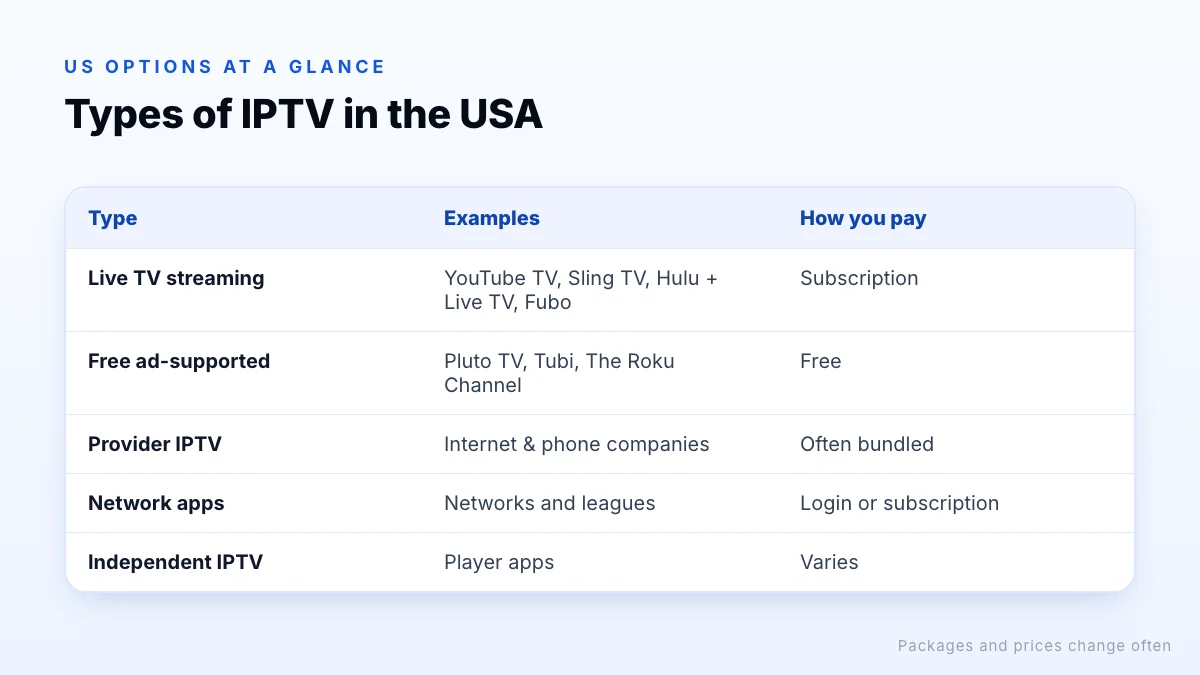
| Type | Examples | How you pay |
|---|---|---|
| Live TV streaming services | YouTube TV, Sling TV, Hulu + Live TV, Fubo, DirecTV Stream | Monthly subscription |
| Free ad-supported TV (FAST) | Pluto TV, Tubi, The Roku Channel, Samsung TV Plus | Free, with adverts |
| Provider IPTV | TV packages from some internet and phone companies | Subscription, often bundled |
| Network apps | Apps from individual networks and sports leagues | Often requires a TV provider login or subscription |
| Independent IPTV subscriptions | Services used through player apps | Varies |
Live TV streaming services
Live TV streaming services are the closest thing to cable over the internet. They sell channel packages watched through their own apps on smart TVs, streaming sticks, phones and computers, and usually include a cloud DVR. Key differences between them:
- Local channels: availability of ABC, CBS, FOX and NBC affiliates depends on your ZIP code.
- Sports: regional sports networks, league channels and add-ons vary widely.
- Screens: the number of simultaneous streams included, and the cost of extra screens.
- Price: base packages and add-ons change frequently, so compare current plans.
Choosing between them works the same way as choosing any IPTV service; see our guide to the best IPTV in the USA.
Bundles from internet providers
Some US internet providers sell TV packages delivered over their own networks, or bundle a live TV streaming service with broadband at a discount. Bundles can be convenient, but compare the bundled price with buying the internet and TV service separately, and check what happens to the TV price when an introductory offer ends. Contract terms, equipment fees and early cancellation charges are more common with provider bundles than with app-based streaming services, which usually run month to month.
Free options: FAST and antennas
Before paying, check what you can get for free. Free ad-supported streaming services such as Pluto TV, Tubi, The Roku Channel and Samsung TV Plus offer hundreds of themed live channels with adverts. And an over-the-air antenna, while not IPTV, still gives free access to local broadcast networks in most areas, often in better quality than streaming. Many households combine an antenna for locals with a paid service for cable channels. Our free IPTV guide covers the free services in more detail.
4K IPTV in the USA
4K live TV in the US is mostly about sport. Some live TV streaming services carry selected events in 4K, sometimes only with a paid add-on, and 4K channels are a small share of any line-up. To see 4K you need the whole chain: a 4K channel or event, a 4K streaming device, a 4K TV and a fast connection. Our 4K IPTV guide explains each link.
4K is selective
Internet speed and devices
As a general guide, plan for about 5 Mbps per HD stream, 10 Mbps for Full HD and 25 Mbps or more for 4K, and add them up for every screen watching at once. The FCC's broadband speed guide gives similar guidance for common activities. Test speed on the streaming device itself, in the evening. See our internet speed guide.
Fiber and cable internet usually have plenty of headroom; satellite internet, rural DSL and busy fixed wireless connections may need lower quality settings. Popular US devices for IPTV include Roku players and TVs, Amazon Fire TV, Google TV, Apple TV and smart TVs from Samsung, LG and Vizio. Which apps are available differs by platform, so check that your service supports your device. Our guide on how to watch IPTV on your TV compares the options.
The law on unlicensed streaming
IPTV is legal technology; what matters is whether a service has the rights to what it streams. Since the Protecting Lawful Streaming Act became law in December 2020, operating a commercial service that streams copyrighted content without permission can be a federal felony. The law targets the people who run such services rather than viewers, but unlicensed services still carry practical risks for subscribers: services that vanish with your money, payment details handed to people operating outside the law, and malware in unofficial apps.
Warning signs include every premium and sports channel for a fraction of licensed prices, no company details, and payment by gift card or other untraceable methods, which the FTC warns is a hallmark of scams.
Getting started
- List the channels you actually watch, including local networks and sports.
- Check what's free: an antenna and FAST services may cover more than you expect.
- Compare live TV streaming services for the channels that remain, using free trials where offered.
- Check your internet speed on the TV device at peak time.
- Count the screens that will watch at once.
Most live TV streaming services let you cancel online and don't require contracts, so it's realistic to switch between them for different sports seasons. Keep a note of renewal dates, and cancel trials you don't intend to keep before they convert.
The bottom line
IPTV in the USA is mainstream: live TV streaming services, free ad-supported channels and provider TV all deliver live television over the internet. Start with free options, compare paid services on local channels, sports, screens and price, and make sure your connection can carry the quality you want. With independent IPTV services, check who runs them and how their channels are licensed before paying, and test any service on your own setup with a trial where one is available.